
Volume 93: Paradigm Shifters, The Barra Foundation
About ImpactPHL Perspectives:
ImpactPHL Perspectives is a multi-part content series that explores the many facets of the impact economy in Greater Philadelphia from the perspectives of its doers, movers, shakers, and agents of change. Each volume is written directly by a leader in this space to discuss best practices and share lessons learned while challenging our assumptions about financial and impact returns. For more thought leadership like this, check out the full catalog of ImpactPHL Perspectives.
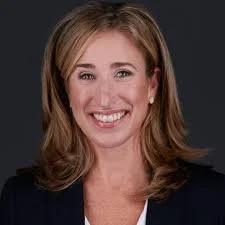
Kristina (Tina) Wahl, President of The Barra Foundation
This article was originally published as part of Untours Foundation’s Paradigm Shifters series and has been republished with their permission.
What inspired you to align your endowment with your mission?
The wisdom and advocacy of Laura McKenna and Elizabeth Killough helped many of us to open our eyes to the possibilities of using the other 95%. Early in my learning, I participated in an impact investing institute held by Mission Investors Exchange (MIE) that helped me to learn what impact investing is and how to get started. While impact investing runs the gamut from below-market rate to market-rate investing, at the MIE institute, I began to understand how foundations can use a portion of their endowment to de-risk and unlock investments from other investors. This “catalytic capital” is defined as investment capital that is patient, risk-tolerant, concessionary and flexible in ways that differ from conventional investment. That ability of foundations to leverage their endowment to spur more investment—and potentially deeper more durable change—really resonated with me.
What have been the biggest opportunities and obstacles at your foundation for mission alignment?
“I began to understand how foundations can use a portion of their endowment to de-risk and unlock investments from other investors. That ability of foundations to leverage their endowment to spur more investment—and potentially deeper more durable change—really resonated with me.”
For one, we are fortunate that our founder, Robert L. McNeil Jr., always had a focus on innovation, which enables us to support organizations that are testing new or emerging ideas and practices. We take the philosophy to heart and believe that we should “practice what we preach” as a foundation. This mindset has enabled us to venture into impact investing, test, learn and keep iterating. Learning by doing has been key. And, the support of the Board has been critical. The biggest obstacle for us has been capacity. Our work has been slow but steady. When we started this journey we had three full-time program staff to manage our grantmaking work. Impact investing, particularly if you are engaging in direct below-market rate deals, requires knowledge and resources. We have been lucky to be able to work with knowledgeable impact investing consultants to help us make progress on this journey. We recently added staff capacity to enable us to continue to move this work ahead.
How far along is your foundation in this journey?
We made our first two impact investments — one to a CDFI and another direct loan to a for-profit social enterprise — in 2016. Since then we have updated our Investment Policy Statement to carve out up to 15% with an impact lens and we have made good progress toward deploying those dollars. But we still have work to do! You can visit our website to learn more about our current impact investing efforts and progress.
What’s next in your mission alignment?
“We have updated our Investment Policy Statement to carve out up to 15% with an impact lens.”
Currently, we are working to see if we can find a way to make it easier for Barra and some of our peer foundations to make below-market rate investments locally. Often these are direct deals that require due diligence that traditional investment consultants are not set up for; or, that might be too early-stage for a CDFI. We are working with a consultant to survey our peers to see where there are opportunities for collaboration; and, to identify other models out there that might be a good fit for Philly. Stay tuned!
What about perpetuity or spending down?
We are set up to be in perpetuity. While I have talked a lot about below-market or concessionary capital, that is only a portion of our portfolio. To remain in perpetuity, we need our portfolio to have a combination of below-market and market-rate impact investments as well as ESG or socially responsible investments. See our website to see the impact investing continuum we use in our portfolio.
What’s a favorite mission aligned investment of yours?
The direct investments we have made: New Day Chester, Kensington Corridor Trust, Ujima Developers are great examples of how foundation investment dollars can be uniquely catalytic.
What’s the most convincing thing to get others on board?
A few things:
Think about impact investing as being additive. Rather than just screening out something like a “sin” stock, how can you proactively invest in things that align might with your mission such as diverse managers, renewable energy, or socially impactful local real estate development?
For below-market rate investments, think of the deal as a grant that you might get back, rather than an investment that you might lose.
This article was originally published as part of Untours Foundation’s Paradigm Shifters series and has been republished with their permission. Click here to read the full article.
Kristina (Tina) Wahl is the President of The Barra Foundation, a private foundation that invests in innovation in arts and culture, education, health, and human services in the Greater Philadelphia region. Prior to joining Barra, Tina worked at The Pew Charitable Trusts as a program officer. She also served as managing director of marketing and development at the Transitional Work Corporation, which at one time was the largest urban transitional jobs program in the country. After graduating from La Salle University, where she played basketball and was a Pennsylvania finalist for the Rhodes Scholarship, she joined the Vincentian Service Corps and served as a volunteer at Covenant House in New York City. She holds a master’s degree in public policy from the John F. Kennedy School of Government at Harvard University. Ms. Wahl has served on the board of trustees at La Salle University, Gwynedd Mercy Academy High School, and La Salle Academy, an elementary school for at-risk youth located in North Philadelphia. She has been a member of the Philadelphia Museum of Art’s Campaign Cabinet and Villanova University’s Department of Public Administration Advisory Board. In addition to CHCS, she serves on the board of Philanthropy Network of Greater Philadelphia.