
Care About Organic Farming? Chris Zuehlsdorff Is Making it Easier and Less Risky to Invest In It
ImpactPHL Perspectives explores the many facets of the impact economy in Greater Philadelphia from the perspectives of its doers, movers, shakers, and agents of change. Each volume shares best practices and lessons learned while challenging our assumptions about financial and impact returns. For more perspectives, check out the full catalog of ImpactPHL Perspectives.
Christopher Zuehlsdorff’s career in impact work began with an unlikely path and a big question: How can we mobilize capital to transform our food system?
After growing up on a family dairy farm in Minnesota, he pivoted to Wall Street, spending two decades in asset management. Working with a non-profit in the Hudson Valley rekindled his interest in agriculture, and had him wondering how he would advise the clients he works with to deploy their capital in service of farms and food systems.
“That led me down a number of different rabbit holes,” says Christopher. He explored infrastructure and processing gaps — what happens to organic grain after it leaves the farm, when so much of the "missing middle" of regional processing and aggregation no longer exists. He explored agtech, the tools and technology that will help make land transition possible. But, ultimately, he became most drawn to land transition itself — organizations working to introduce organic and regenerative practices to more farmland.
“How we treat the soil is fundamental,” Christopher explains. “Rehabilitating and regenerating our soils will lead to much better outcomes when it comes to the type of food everyone is putting into their bodies.”
Thankfully, Christopher wasn’t the only one who felt this way, so he didn’t have to start from zero. When the founders of Amber Farmland Investments (formerly named Iroquois Valley Farmland REIT) were looking for their next generation of leadership, Christopher excitedly raised his hand to be their CEO in February 2023.
“I've got two personal missions… One is to mobilize capital into food and agriculture to transform the food system. The second piece is to support and help the next generation of people who want to get involved in impact work.”
“I've got two personal missions in my career at this point,” he says. “One is to mobilize capital into food and agriculture to transform the food system. The second piece is to support and help the next generation of people who want to get involved in impact work.”
Here’s how Amber Farmland Investments is engaging with investors to support the future of farming in America—and how impact investors can get involved.
REIT 101: How it benefits investors and impact
The primary way to invest in Amber is their real estate investment trust or REIT, which is a common investing vehicle that pools money from multiple investors to buy property.
While REITs are more typically associated with commercial or residential property, Christopher shares that it applies particularly well to the long-term ownership of farmland as well, aligning the interests of investors and organic farmers.
With the capital that’s pooled into Amber’s REIT, the organization can acquire farmland that it then leases to organic farmers. Because it's structured as an evergreen investment vehicle—a semi-permanent capital structure with no fixed end date—Amber can offer that land to it’s network of organic farmers on a long-term basis.
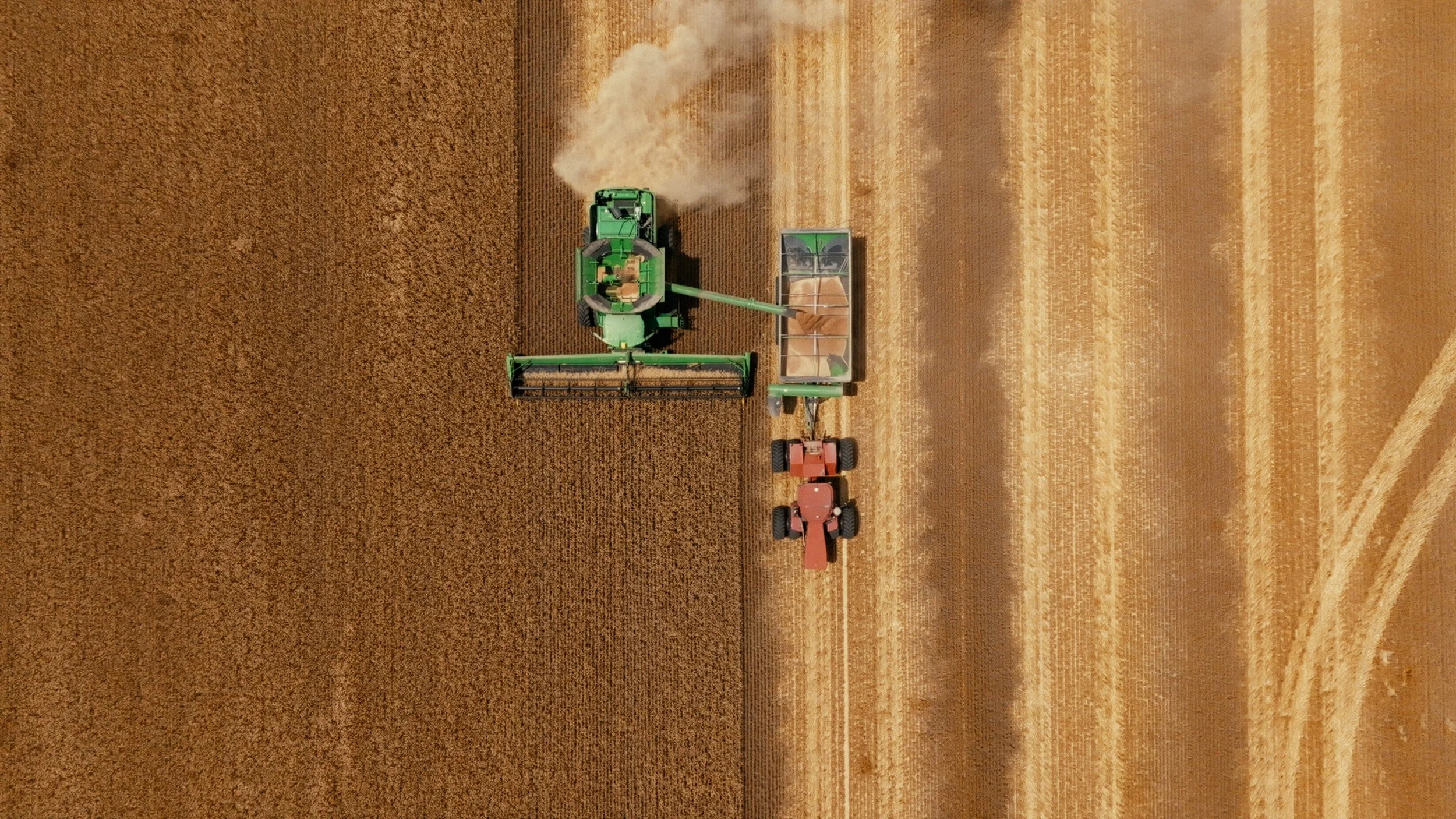
Above: One of Amber’s farmers at work
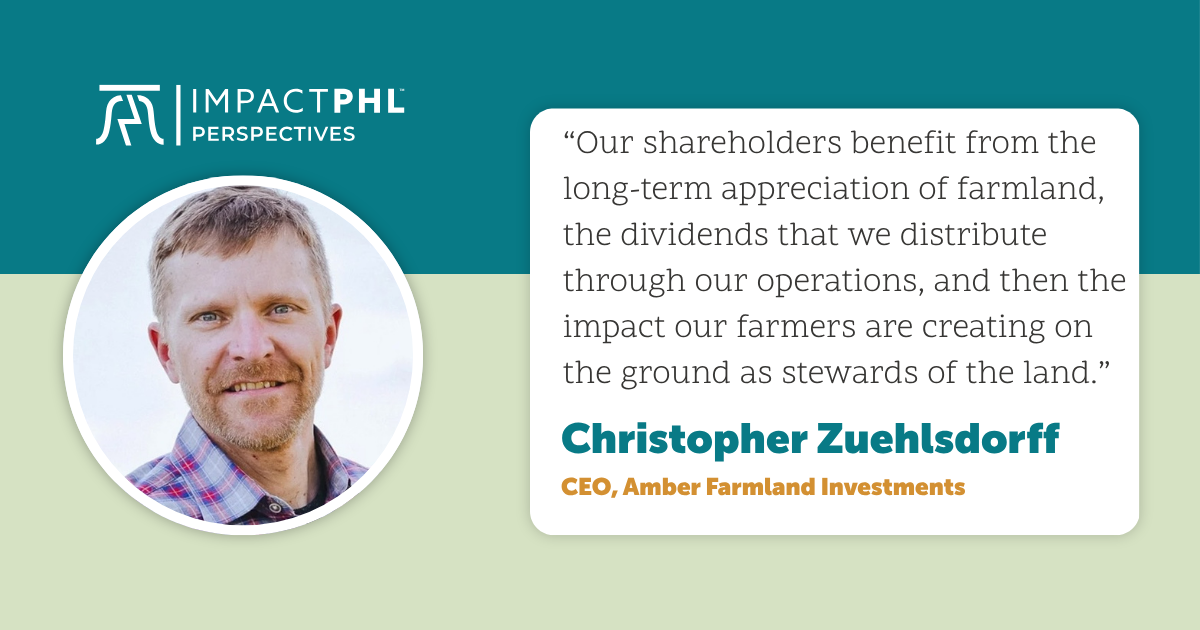
“That enables long-term land tenure for our farmers. It gives farmers the confidence we won't sell farms because we have to pay investors back in a fixed period of time. And our shareholders benefit from the long-term appreciation of farmland, the dividends that we distribute through our operations, and then the impact our farmers are creating on the ground as stewards of the land,” explains Christopher.
That stewardship also comes thanks to the long-term leasing structure, which supports land transition by giving farmers leeway to complete the three-year organic certification process.
“They have visibility to get through the J-curve of the organic transition and then profitably manage certified organic farmland after that,” Christopher explains, adding that their financing structure removes the pressure of mortgage debt.
Take Harold and Ross Wilken of Janie’s Farm and Mill, the first farmers in Amber’s portfolio. Over the past nearly 20 years of working with the organization, they have been able to scale up to managing over 4,000 certified organic acres—1,000 of which are financed in partnership with Amber—and also built a mill in 2017 to process and distribute their organic grains to the broader community.
And given Amber’s track record of 8% annualized returns since inception, it can do good for the food supply while still seeing a healthy payback. Better yet, an individual’s investment doesn’t have to be huge to have impact. In 2019, Amber obtained a Regulation A exemption with the SEC, allowing them to raise capital from non-accredited investors with a buy-in as low as $10,000.
“I’m very proud that we’ve democratized access to a diversified portfolio of organic farmland,” says Christopher. This move has helped them attract over 1,000 investors across the country, whom they connect with via their website, through relationships with registered investment advisors, and through outreach to family offices, consultants, and impact investment platforms.
Reducing the risk of farmland investing
Christopher says one of the biggest concerns he hears from potential investors is whether farmland investing is risky. Amber primarily tackles that risk through scale, with a portfolio of over $117 million that they invest across nearly 33,500 acres and more than 60 farmers across 18 states.
Amber primarily tackles that risk through scale, with a portfolio of over $117 million that they invest across nearly 33,500 acres and more than 60 farmers across 18 states.
“Certainly one farm in isolation may be a more risky investment, but when you diversify across farmers, farm types, and geographies, what begins to take shape is a relatively stable returning investment,” Christopher explains.
Amber has created additional stability by focusing on farmers who have a track record of organic farming or who are already in their network. About 65% of Amber Farmland's transactions are reinvestments — additional acreage leased to farmers who've already managed successful land transitions with the organization’s support.
The company also clusters investments into farming “hubs,” concentrated areas with a higher density of organic growers. The core of their portfolio is currently in Illinois, Indiana, Ohio, and Michigan — the “fresh coast” as Amber’s co-founders call it.
That improves the likelihood of success for the farmers they’re working with because they have easy access to things like mentorship, peer support, technical assistance, and organic buyers. It also helps mitigate the risk of a farmer retiring or deciding to pivot to a different career. If one farmer moves on, there are plenty nearby who are poised to take over.
Rooting conversations in what investors care about
In terms of galvanizing potential investors, Christopher says it’s been helpful to understand what drew them individually to organic farming in the first place.
“Everyone has a different way of coming to organic agriculture,” he says. For some, it's a health scare for themselves or their family that reframes how they think about soil health and food. For others, it's wanting to impact climate change: organic practices support better water absorption, soil filtration, carbon sequestration and biodiversity, all of which Amber counts as part of its impact pillars.
Those conversations help the Amber team understand the messaging that matters for their monthly newsletter, social media, and website. It also helps them keep current investors engaged and drive reinvestment with impact reports, though Christopher says his favorite way to demonstrate impact is to get investors to visit one of their farms.
And, for investors who care about the monetary return, Christopher likes to remind them that their REIT is non-concessionary. (Though they do also offer a concessionary opportunity via their “rooted in regeneration” notes that support farmers who have historically faced structural, financial, or geographical barriers to land access.)
“I like to tell investors that the performance is compelling on a standalone basis,” says Christopher. “But then when you factor in the impact, whether you're concerned about environmental issues around conventional farming, the chemicals in our food system impacting human health, or just simply seeing healthy, thriving farmers and our communities, it can be both impactful and non-concessionary.”
Article by Erin Greenawald.