
All Investing is Impact Investing: A Total Impact Summit ‘26 Recap
After two days, 500 people, and dozens of sessions, you would be forgiven for having a head so full of ideas you didn’t know how to even start to summarize Total Impact Summit ‘26. But with some distance, the themes of the Summit converge at a single (literal) destination: the power of place.
The most impactful capital is orchestrated by the people who live where it is deployed, measured on a decade-long arc rather than quarterly or yearly returns. It treats neighborhoods, regions, and rural communities as the unit of analysis. It uses the fuel of capitalism to nudge our broken systems into a better place, however slowly and however humbly.
The Summit's stated theme of Capital Orchestration for the Future of Place kept reasserting itself across nearly every panel. But there were other threads too. Here are nine that ran across sessions:
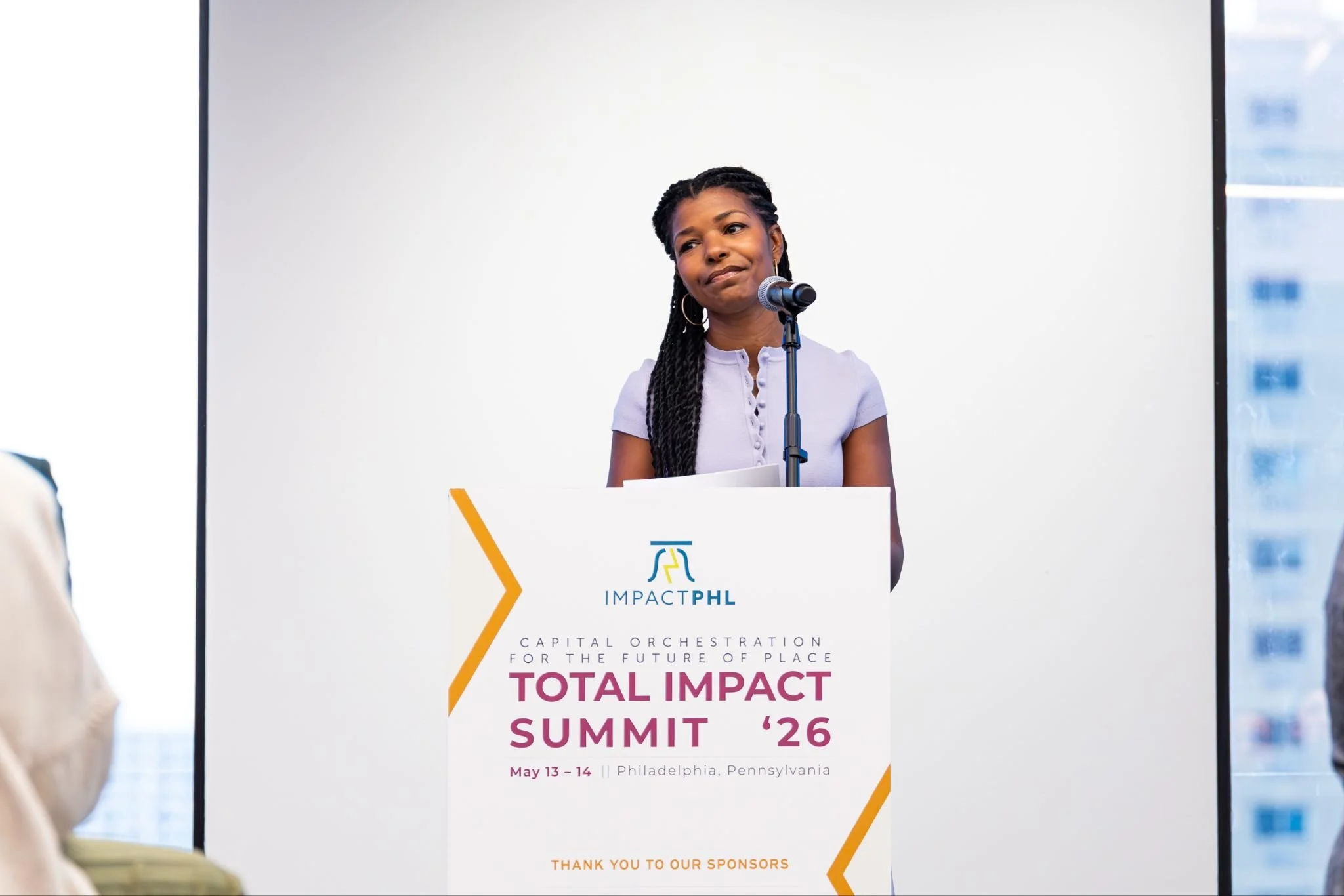
Dr. Kimberly McGlonn, the MC of TIS26 and Founder/CEO of Build It Boldly
Thread #1: None of our economic systems are natural law
The Summit opened and closed on the same foundational claim: the financial, economic, and policy systems we operate inside were designed by people, and they can be redesigned by people.
Markets do not have to look the way they do. Investment frameworks, ownership structures, and public policy itself are all products of assumptions and decisions. Treating those systems as inevitable is what locks them in place. The role of impact capital is to constantly and assertively press against those systems to bend them to new places.
“This was my first time attending, and I experienced several “aha” moments from the wealth of knowledge, lived experience, and practical insights shared by the speakers and attendees.”
— a TIS attendee
Finance, in particular, is a design discipline: tax credits, guarantees, and credit instruments are all things someone had to invent. The work of TIS26, set out in the opening remarks by ImpactPHL CEO Kafi Lindsay and returned to in the closing, is to refuse resignation to “how things are” and treat the architecture as something that can be changed.
"Over time, systems begin to feel inevitable. The rules begin to feel permanent. But they are neither inevitable nor permanent. They are designed, which means they can be redesigned."
— Kafi Lindsay, CEO, ImpactPHL
"A lot of the work that I do is just teach history lessons. It's really about helping folks understand how we got here and that various economic policies — even economic policies that we think of as good ones for our country - excluded certain people. And, some of the economic hardships for folks in this country are recent. We're not just talking about things that happened a long time ago.”
— Edgar Villanueva, Author, Decolonizing Wealth: Indigenous Wisdom to Heal Divides and Restore Balance
"Place is the neighborhood where the bus doesn't come. Place is the block where the school closed. Place is the community where the capital has never landed — not because there was no need, but because the rules weren't built for that community."
— Denise Barreto, Founder and Managing Partner, Built For Us All
"Almost all of us, even those of us who are trailblazing, are still stuck when it comes to capital and finance around an order that is like the American dream — rugged individualism, survival of the fittest, competition, accumulation, and dominion over nature. And our financial model matches that. Instead, let’s work on creating an economics, politics, and culture of relationship."
— Deborah Frieze, Founder, Boston Impact Initiative
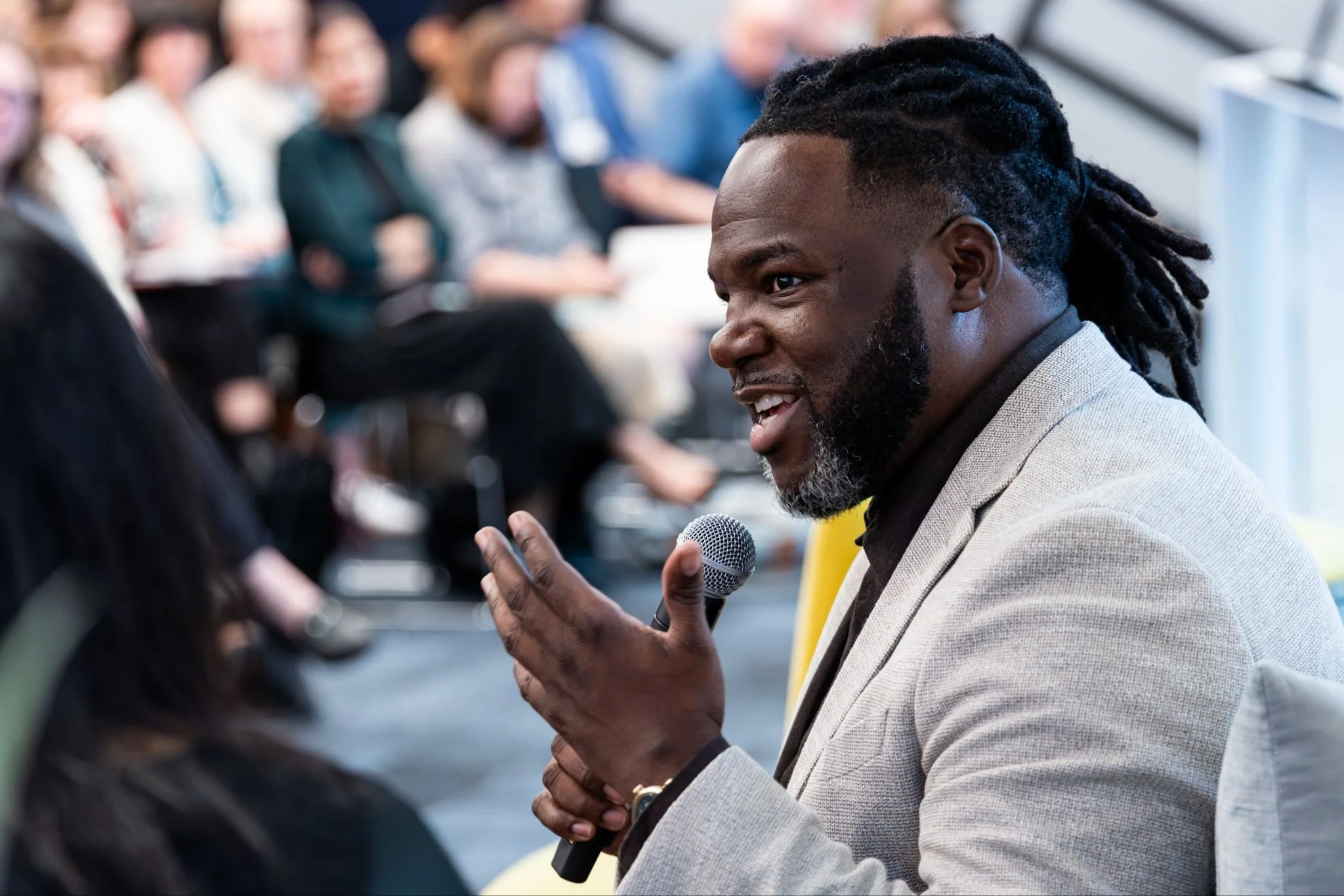
Adair Mosley, CEO, GroundBreak Coalition
Thread #2: Humility, not hubris
The most consistent self-criticism in the room: capital allocators projecting their own values, biases, and theories of change onto communities that already know what they need. It’s a shift that Day 2 kept circling: from designing for communities to co-designing with them.
The fastest way to burn a place-based program is to arrive with the answers. The institutions doing the work that actually compounds are the ones who hire local leaders, do design charrettes with residents, and treat their own theory of change as a temporary hypothesis.
"GroundBreak is built on a premise that communities know the solutions to their problems. And I believe that there are two things that we can offer community. It's humility or hubris. And hubris says, here's what you need. Humility asks the question, what do you need?"
— Adair Mosley, CEO, GroundBreak Coalition
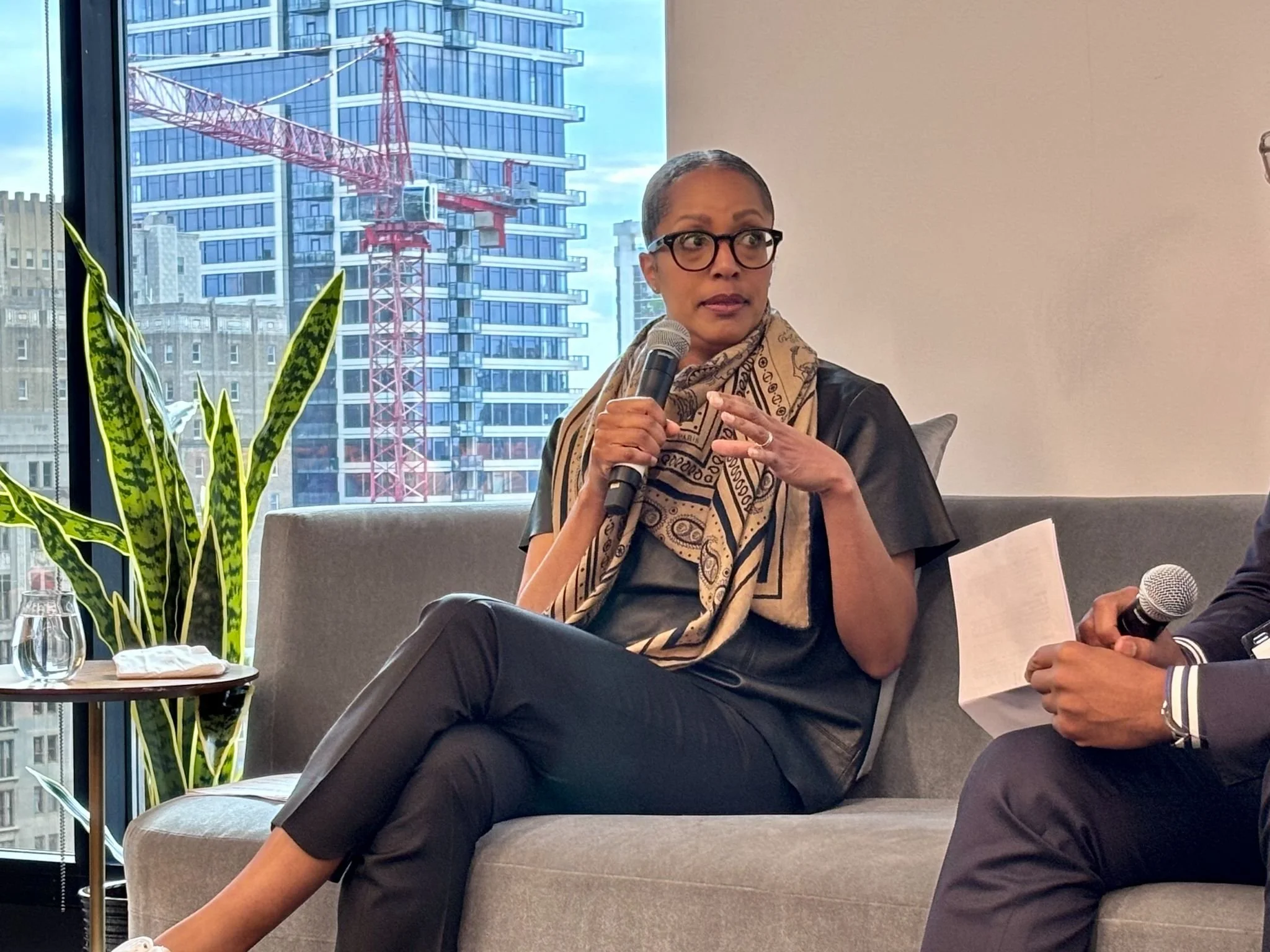
Rukaiyah Adams, CEO, 1803 Fund
Thread #3: AI is infrastructure, not a separate asset class
AI showed up at the summit not as a sector to allocate to, but as the infrastructure layer underneath every place-based decision. Speakers pushed the room to look at what the buildout actually consumes: energy, water, physical space, and human talent. The same communities most under-resourced to absorb the externalities of that buildout are the ones being asked to host the data centers.
Several speakers connected that to a more uncomfortable point that the field's relationship-based, place-rooted practice is exactly what AI as a category undervalues.
“We know that technology will transform society. And, we imagine that "technology” is unconnected to the places where we live. But, technology almost always has a nexus to a place, and that nexus is often a natural resource — some real thing needed for production. Where I live on the west coast, there are three natural resource inputs to technology production: land, energy and water. On the one hand, we are having a deep and meaningful national debate about the impact of Ai, and technology more broadly, on society; but, on the other hand, there is relatively little national debate about the terrestrial externalities of Ai data center proliferation and its impact on human beings and our planet. We're thinking about how communities can have a seat at that table."
— Rukaiyah Adams, CEO, 1803 Fund
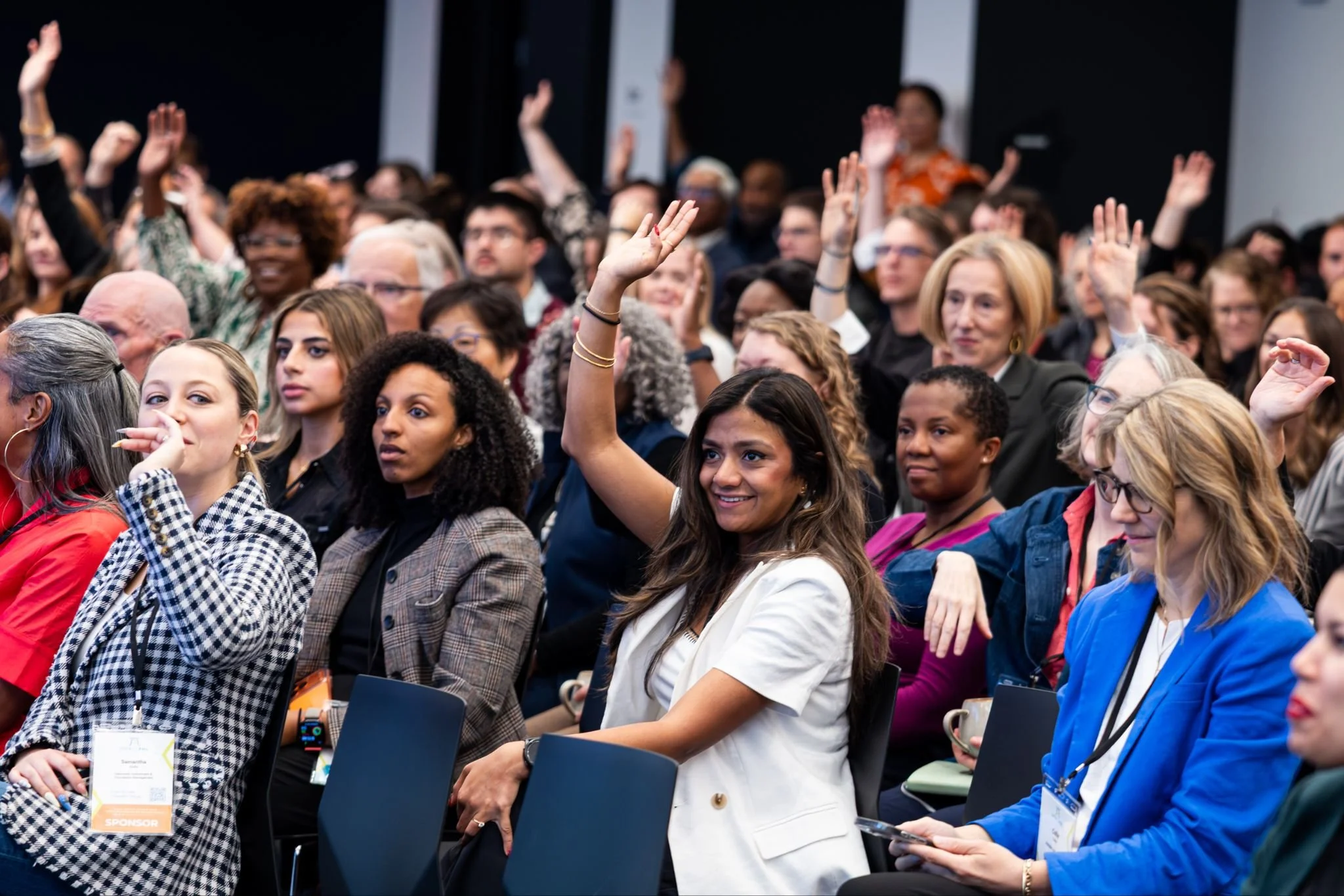
Attendees at Total Impact Summit ‘26
Thread #4: "Market rate" is a benchmark worth interrogating
The field's most reflexive financial framing of “risk-adjusted market-rate return” got picked apart in several sessions.
Speakers questioned whether "concessionary" carries any analytic meaning when the rest of finance is heavily subsidized, and whether the benchmarks the field measures itself against are even reasonable starting points. Stop letting capital allocators externalize the cost of the systems they create, and stop benchmarking impact funds against indices designed for entirely different goals.
"All investing is impact investing. All of it. It doesn’t seem like it because we've allowed some people to be free from the externalities that they create through their investment decisions—at the same time we assign impact benevolence to those who think about externalities. Neither approach is correct. Being a thoughtful investor is not benevolence; it’s just competent practice. So, I ask those investors to look at their portfolios and think about the externalities that they're creating for communities like mine."
— Rukaiyah Adams, CEO, 1803 Fund
"Investors need to think and act systemically. Seventy-four to 95 percent of a diversified portfolio's returns comes from beta. Yet the financial services industry prioritizes the dogged pursuit of alpha, outperforming a benchmark that is does not consider externalities that are core drivers of beta. Addressing systemic risks like climate change and economic inequality is a financial imperative, not just a moral one."
— Fran Seegull, President, U.S. Impact Investing Alliance
"There was some talk yesterday about not benchmarking to the market. So what do we benchmark to? I think we can benchmark to nature. Instead of working on a singular “next" economic system—which would be another monoculture—perhaps we can design a complex coexisting basket of economic systems."
— Deborah Frieze, Founder, Boston Impact Initiative
"Fundamentally, investing is identifying, understanding, and pricing risk. To be an investor, is to take risk. Don’t treat your investment portfolio like a risk mitigation machine design to manage our decline. Kick the tires on assumptions about risky populations and communities—most of those assumptions are incorrect. Also, just make bigger investments."
— Rukaiyah Adams, CEO, 1803 Fund
“Before we could ask ‘what is an acceptable risk-adjusted, market-rate return’, we had to ask is this really risky, why? Are there biases at play here?”
— Thaddeus Fair, Managing Director, Living Cities
Thread #5: Coordination, not capital, is the binding constraint in most regions
There is a seemingly endless number of organizations with overlapping interests in impact investing. Well-meaning efforts large and small sputter because institutions, organizations, and neighbors don’t coordinate effectively.
The most-cited Day 2 case study, Minneapolis's GroundBreak Coalition, brought 40+ public, philanthropic, and financial institutions into a single regional strategy. That kind of alignment does not happen by mission statement. It happens through discipline.
"We ask institutions, ‘What is your self-interest?’ And once we understand the self-interest, then we're able to synthesize that and then get to an alignment."
— Adair Mosley, CEO, GroundBreak Coalition
"At Living Cities, we have discovered the need for what we call Capital Tables– a place where residents, city leaders, private investors, philanthropy, and public-sector partners come together to shape development in their community. The city plays a critical role as the initial convener, bringing the stakeholders to the table. What makes our approach different is that residents and community leaders are equal players at that table in determining how capital is invested.”
— Joe Scantlebury, CEO, Living Cities
"While you've got all these government folks who are partners, it is not being led by government. It's being led by civic infrastructure and residents."
— Carol Naughton, CEO, Purpose Built Communities (on Reach Riverside and Logan Herring's work in Wilmington)
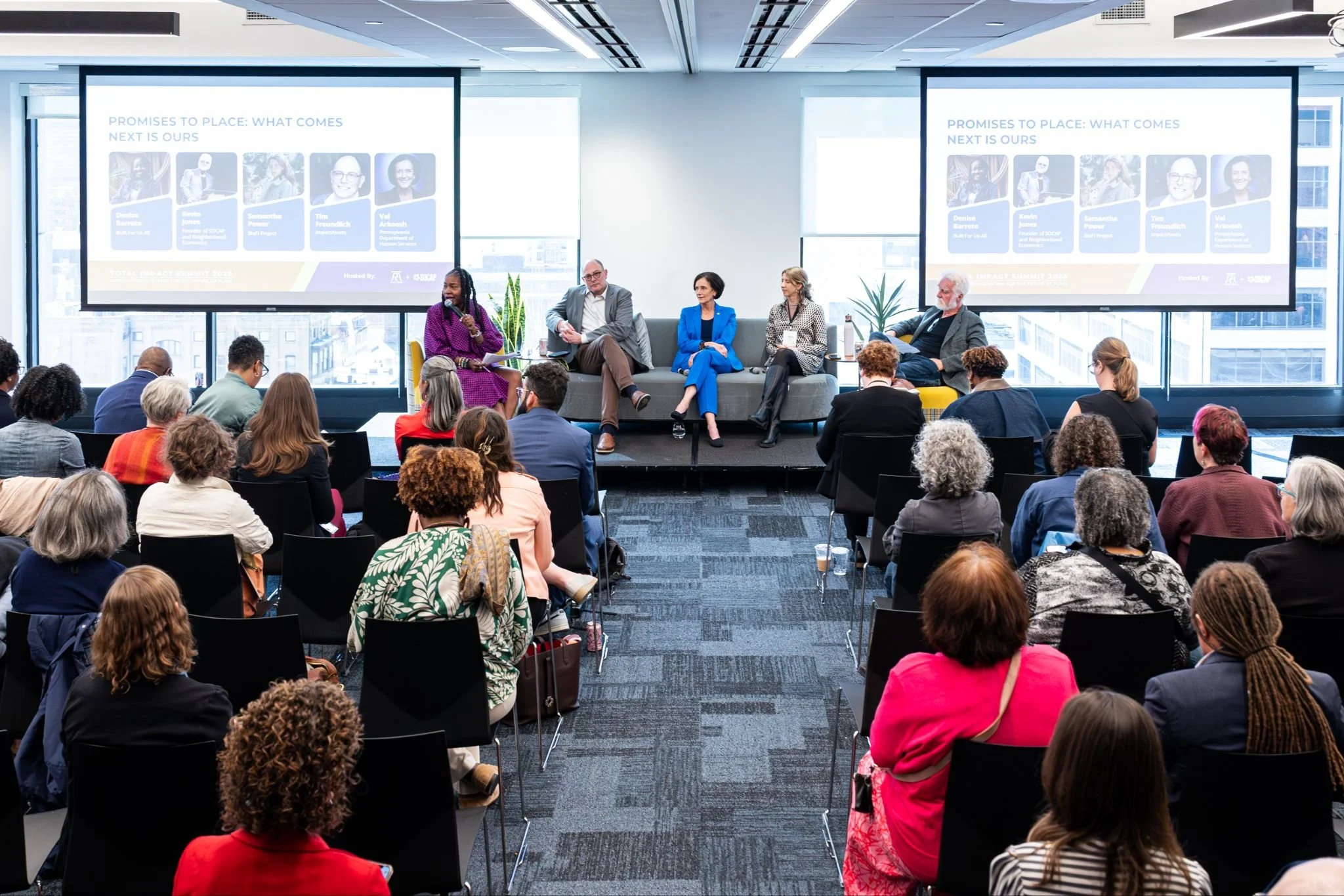
The Promises to Place panel takes the stage
Thread #6: Stop apologizing for subsidy
Community Reinvestment Act (CRA) dollars are a subsidy. SBA loan guarantees are a subsidy. USDA business loan programs are a subsidy. Oil and gas, healthcare, agriculture, and large-cap tech all operate inside heavily subsidized ecosystems and feel no need to flinch about it. Letting others define impact capital as “subsidized” surrenders narrative agency.
“[I enjoyed the] intentionality around speakers that were competent, grounded and well-rounded.”
— a TIS Attendee
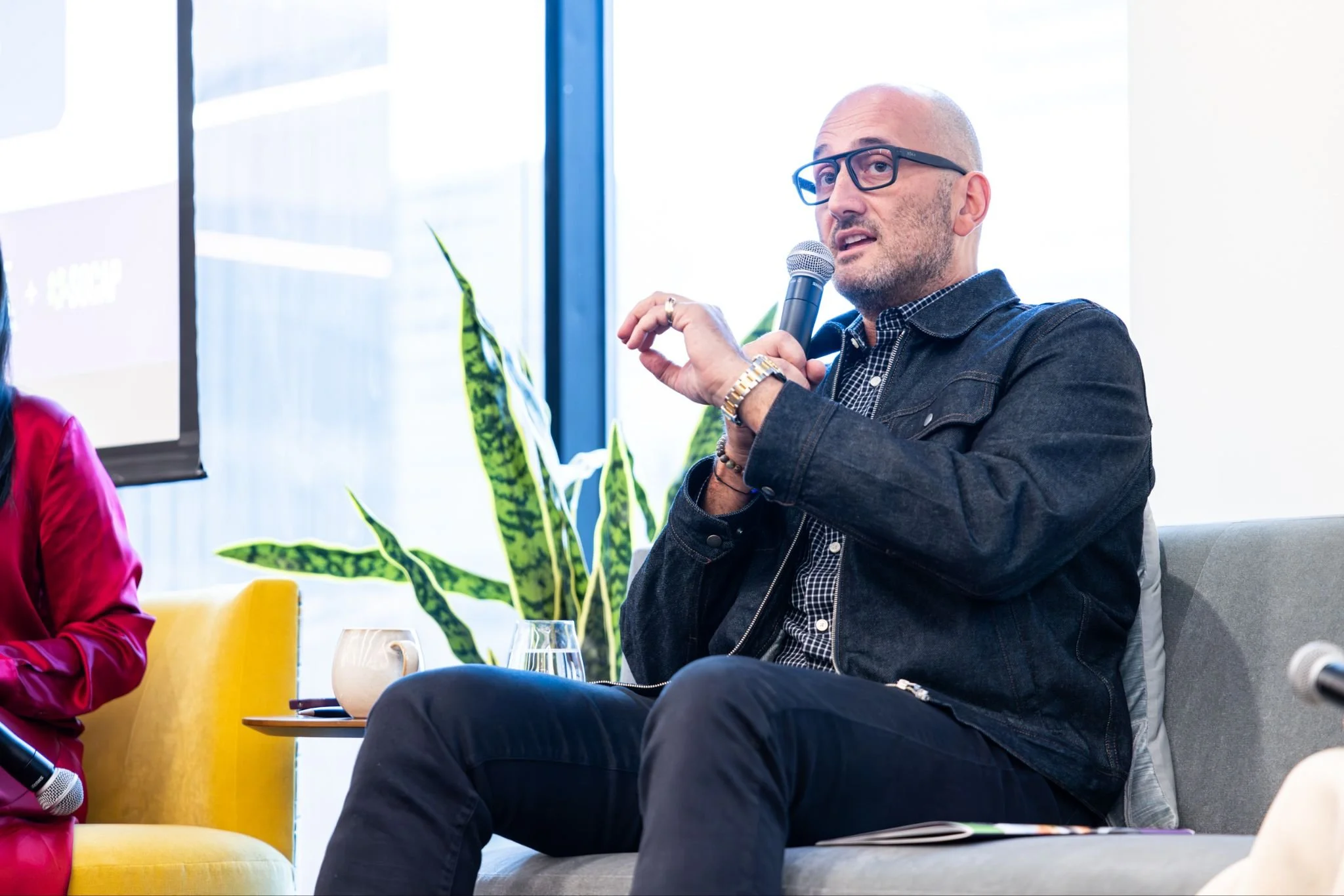
Peter Kaldes, CEO, Next50
Thread #7: There is opportunity in overlooked markets
By 2034, Americans 65 and older will outnumber Americans under 18 for the first time in history. Eleven states are already there, including Pennsylvania.
Meanwhile, rural America receives 1% of all private capital, despite making up 12% of all businesses. Both markets share the same diagnosis: capital flies over because the people who deploy it don't know the people who live there.
"It's a very macro way of describing our collective problem, which is: money goes where money is. How do we get money where it needs to be?"
— Christine Jones, Founder & CEO, Blue Highway Capital
"Our healthcare system, our education system, our workforce — all of it is built for 22-year-olds. Guess what? We're running out of them."
— Peter Kaldes, CEO, Next50
"There are higher survival rates of companies in rural America. There is lower cost of workforce. There is lower attrition. Small businesses in rural America represent 84% of their companies… so small companies have been the predominant growth engines in those communities."
— Christine Jones, Founder & CEO, Blue Highway Capital
Thread #8: Ownership is power
The Summit returned often to the root issue of local capital: ownership. Whoever holds the deeds, the capital, and the asset holds the power. Organizations that gift or share capital without transforming stewardship over that capital and what it builds are likely perpetuating issues they are attempting to solve.
There are new asset classes and vehicles taking shape. New technologies are democratizing information and power. We are in a moment where some of the “it’s always been this way” systems can be remade. Will we meet the moment?
"Economic democracy — democratic, employee and community ownership — is where people collective decide how to own and control assets."
— Deborah Frieze, Co-founder, Unlock Ownership
"There's a lot of movement happening right now around community ownership, the share-ownership economy… If you're not owning, you're not shareholding — you're a little bit left out of that equation."
— James Johnson-Piett, Principal and CEO of Urbane Development
"Economic democracy — democratic, employee and community ownership — the ownership economy… where people are the ones collectively deciding how to own and control stewardship and agency over assets."
— Deborah Frieze, co-founder of Unlock Ownership
Thread #9: Trust is the slowest asset, and the most leveraged
Every keynote that touched community capital eventually came back to time. The deals closing in 2025 were seeded in 2014, 2019, 2021. The pipeline that matters is not a quarterly spreadsheet, it is the years-long arc of conversations. And trust cuts both ways: it compounds slowly but can erode in a single day.
The institutions that survive the next decade are the ones that build the trust pipeline before they need it.
"I can take a whole year, a whole two years of building trust, but I can also lose it in one day. And so every day I cannot rest on the laurels. I cannot rest on yesterday's promises. I have to say every day I'm trying to earn your trust. Trust is about a set of consistent experiences over time. And so every day we have to heal. And I believe every interaction that we have with the community needs to be a moment of healing."
— Adair Mosley, CEO, GroundBreak Coalition
"Listening to communities is essential because we often think we know what residents need based on what we've heard before. We often assume we understand a community's challenges and priorities, but true understanding comes from recognizing that there is often a deeper story and context than we initially realize."
— Joe Scantlebury, CEO, Living Cities
"Pricing is really not an issue. It's more about trust."
— Christine Jones, Founder & CEO, Blue Highway Capital, on rural investing
What's next
Every one of us is going home with a different set of relationships, frameworks, and obligations than the ones we walked in with. The work over the next twelve months is to do something with them.
Sign up for the ImpactPHL newsletter to get more perspectives, thought leadership, and opportunities to connect and learn from the impact community. And, most importantly, to get a heads up when the dates for next year’s Summit are set.
See you at TIS27!