
Volume 97: Is It Even Possible To Change Investing From Within?
About ImpactPHL Perspectives:
ImpactPHL Perspectives is a multi-part content series that explores the many facets of the impact economy in Greater Philadelphia from the perspectives of its doers, movers, shakers, and agents of change. Each volume is written directly by a leader in this space to discuss best practices and share lessons learned while challenging our assumptions about financial and impact returns. For more thought leadership like this, check out the full catalog of ImpactPHL Perspectives.
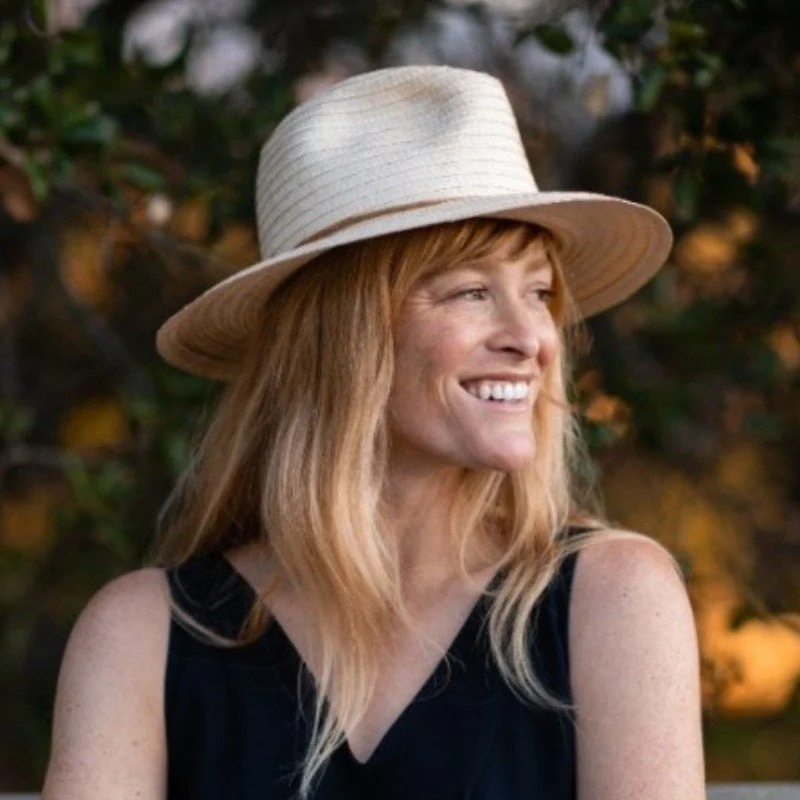
Sydney Bolger, Director, US & Canada at The ImPact
Sydney Bolger doesn’t just think we need to rethink investing—she thinks we need to rethink impact investing.
With a decade of experience in the space, she feels most impact investors start with the wrong question.
“Instead of asking, ’What kind of impact do I want to create in the world?’ and then asking what kind of capital is needed, it tends to be: ’I need my capital to achieve market-rate returns. What kind of impact can I create?’” she explains.
Instead, Sydney dreams of an economy designed around our “deeper longings for the world.” Then, we figure out how to tap all of our capital—relational, financial, social, and political—to create truly regenerative and just futures. And she hopes this is just the start of a societal transformation away from accumulation and toward enoughness.
Now, as Director of US and Canada at The ImPact, a global membership community of families aligning their capital with their values, Sydney feels she’s getting closer to helping people make that change—not just in their portfolios, but in how they think about wealth, security, and what they’re actually trying to leave behind. This, she’s come to believe, is how investing actually changes: not first by trying to move capital differently, but by shifting the mindsets of those who move it.
A winding path in and out of impact investing
Sydney was in university during the 2008 financial crisis when a seminar called Humane Economy first got her asking different questions. The central idea they were exploring: What would it look like to build an economy around fundamentally different values?
“The financial system is one of the most influential systems creating the world that we live in.”
It was when a friend pivoted into impact investing a few years later that Sydney first thought she’d found her answer.
“She described it as a movement of people working inside of the financial system to shift it to flow capital for the flourishing of people and planet,” Sydney says. “I was inspired by that because the financial system is one of the most influential systems creating the world that we live in.”
Without a background in finance or economics, she jumped straight into the deep end, working for a multifamily office that had been doing impact investing for over a decade—and quickly found herself disillusioned. She kept seeing investors who were motivated by impact but still letting their financial expectations drive everything.
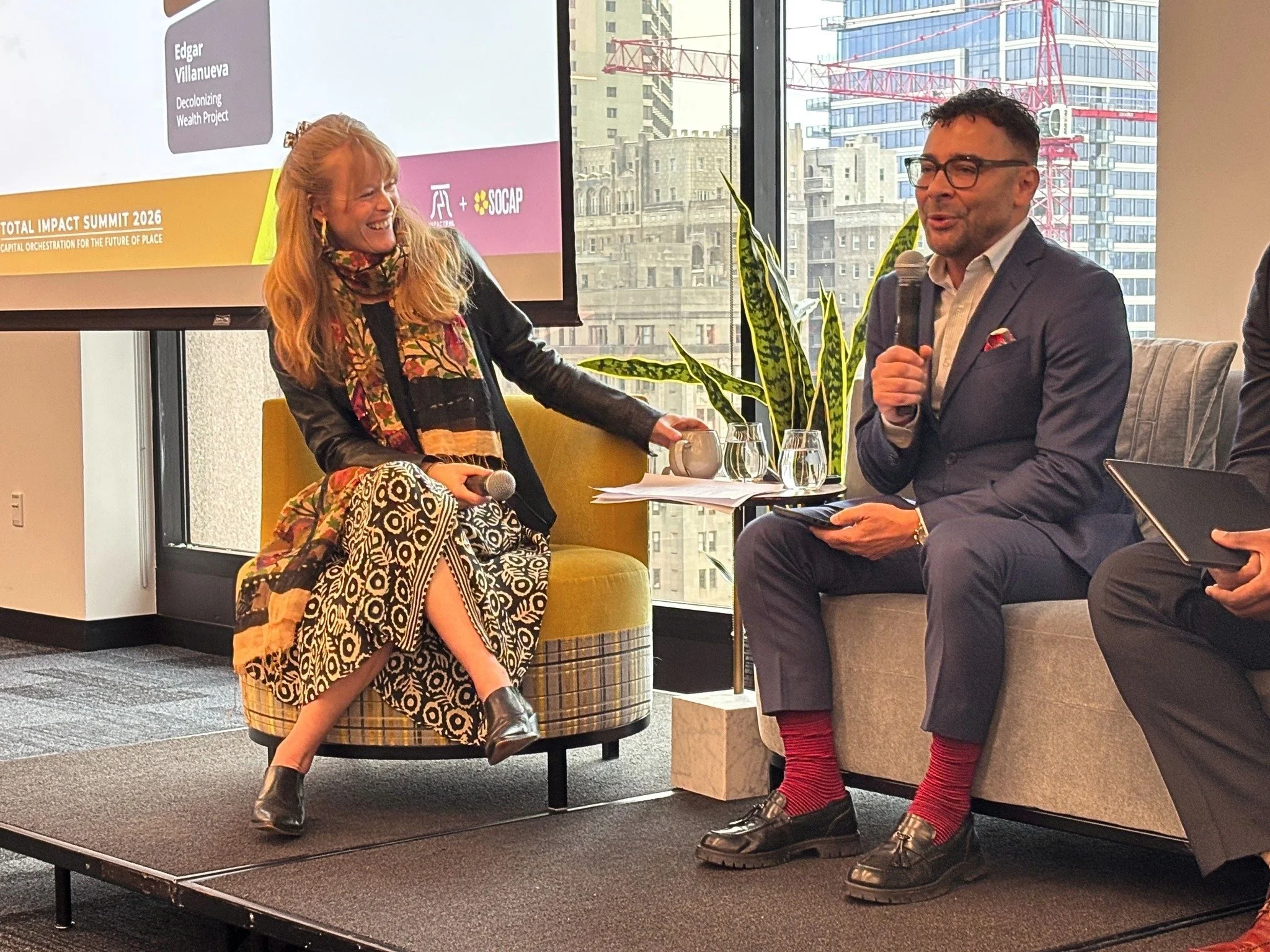
Syndey alongside Edgar Villanueva at Total Impact Summit ‘26
She pushed back internally and helped launch the catalytic impact investing program, investing patient, flexible, and creative capital that centers impact over financial return in order to fund the kind of work the market wouldn’t otherwise touch. It was better, but she still felt like she was dancing around the real problem.
“The financial lever, while powerful, is actually quite downstream,” she says. “The more powerful upstream lever is shifting the worldviews that underpin the systems and structures that we live within.” In other words, one needs to change minds to change investing habits.
So she left, thinking she’d never return to the impact investing space.
Building new systems within the existing system
Sydney became motivated to build economic systems that mimic healthy living systems and enable the flourishing of all life. At Schumacher College, studying regenerative economics, she immersed herself in conversations about how we build systems that reflect our deep interconnectedness. She left wanting to focus on projects that made the power of money less powerful, helping people escape the race to accumulate more capital as a form of safety and security.
But as she dug deeper into solidarity economies (movements prioritizing social profitability instead of just monetary), mutual aid, and other community-based work, she was faced with an unfortunate reality: All of that work needed money to succeed. In order to build a new system, she was going to have to start within the existing one.
“In order to truly believe new economic systems are possible, we have to be able to experience living examples.”
Around that time, The ImPact came calling. Co-founder Sam Bonsey described an organization genuinely trying to do something different—a peer learning community rooted in deep relational trust where family offices came together to have vulnerable conversations about how their capital could move through the world in ways that aligned with their values.
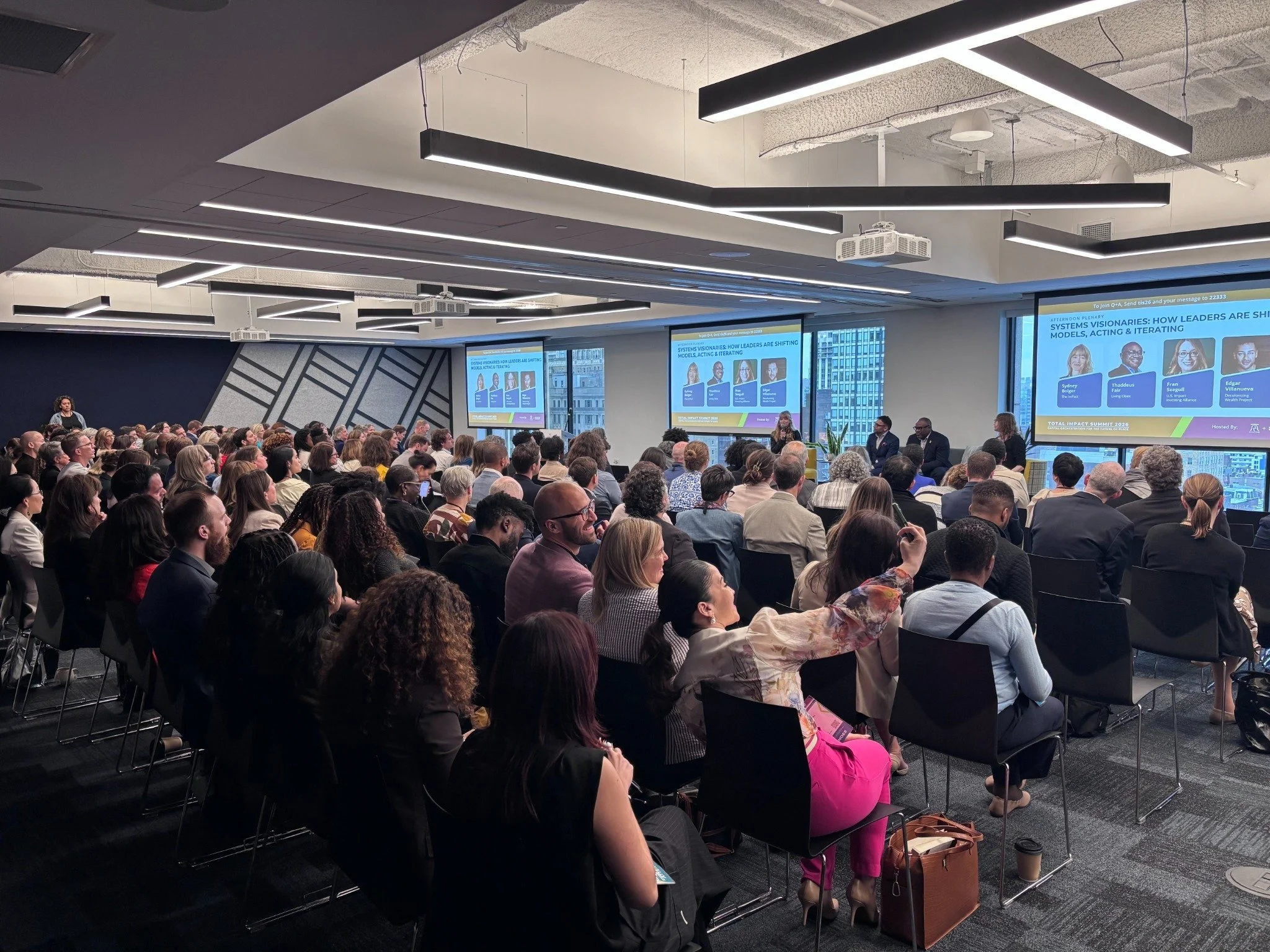
Syndey moderating at Total Impact Summit ‘26
“It felt like a place where we could do some of the important work of consciousness shifting,” she says. “Shifting the worldviews and mental models out of which our systems and structures are born.”
Sydney is especially excited about the work they’re doing at The ImPact Lab, a “do-tank” where members seed or accelerate some of the most interesting initiatives at the leading edge of the impact investing field. Examples include:
Trimtab was founded by seven families within The ImPact who wanted to explore what happens when capital’s purpose isn’t maximizing risk-adjusted returns, but creating systemic outcomes that wouldn’t otherwise occur. Governed by a Perpetual Purpose Trust—a non-charitable trust that benefits a purpose rather than a person—Trimtab has committed nearly $20M across six continents in just two years, helping remove landmines to electrify villages in Angola, enabling indigenous cooperatives in the Amazon to access outside financing for the first time, and supporting small businesses in northern Syria amid the collapse of the banking system. “The work is emergent, imperfect, hard to measure, and joyful,” said Sydney.
The TransCap Initiative was accelerated through The ImPact Lab, with member families providing seed funding to launch it. TransCap brings systems thinking into the world of purpose-driven finance to push the boundaries of investing through research and prototyping. One example: They’ve been working working with ecosystem leaders to pool funding from multiple sources to support the shift to regenerative agriculture in the Midwest.
The Ownership Capital Lab was also accelerated within and fiscally sponsored by The ImPact Lab. At the core of their work, they are asking foundational questions about how businesses should be owned and governed to produce more equitable outcomes. Last year, they published the Employee Ownership Capital Roadmap and are now gathering investors and institutions to explore how to grow the employee ownership economy.
The Innovative Finance Initiative a five-year project supporting the people, tools, and ideas pushing the boundaries of how capital flows towards impact. Fiscally sponsored by The ImPact, IFI convenes family offices, lawyers, academics, fund managers, and entrepreneurs around topics like mission-preserving exits, donor-advised funds, and impact-linked compensation. They’re also building a public resource hub, an expert directory, and practitioner-led training and events.
“In order to truly believe new economic systems are possible, we have to be able to experience living examples,” says Sydney. “The people that are able to seed those exemplars with catalytic capital are people like the families that we work with at The ImPact.”
The most important question of impact investing
“To successfully flip the script of impact investing … Sydney thinks people have to answer a deeper question: What is enough?”
To successfully flip the script of impact investing—from return first to impact first—Sydney thinks people have to answer a deeper question: What is enough?
“Over the coming months, we will be bringing families within The ImPact on a journey of clarifying and reimagining ’enough’ as a pathway towards liberating capital for impact in partnership with the Enough Project,” shared Sydney. For many impact investors, this question can surface fears and cultural norms about legacy and security. “While this is a deeply personal inquiry, it is also collective. When we shift our perspective and behaviors, we create ripples of transformation that can shift cultures — the culture of our families, our communities, and our societies.” Sydney sees the conversations happening at The ImPact as part of a broader shift in wealth culture.
When investors are willing to reframe their idea of enoughness, it opens up a more expansive question: What is the impact that you want to create?
“Transforming financial and economic systems is not easy work and requires a willingness to take the kinds of financial risks that other investors may not be willing to take,” says Sydney. The payoff is getting to do it in service to a vision of regenerative and just futures.
Written by Erin Greenawald